Walls
At 12 years old, I desperately wanted to buy AMD and NVDA.
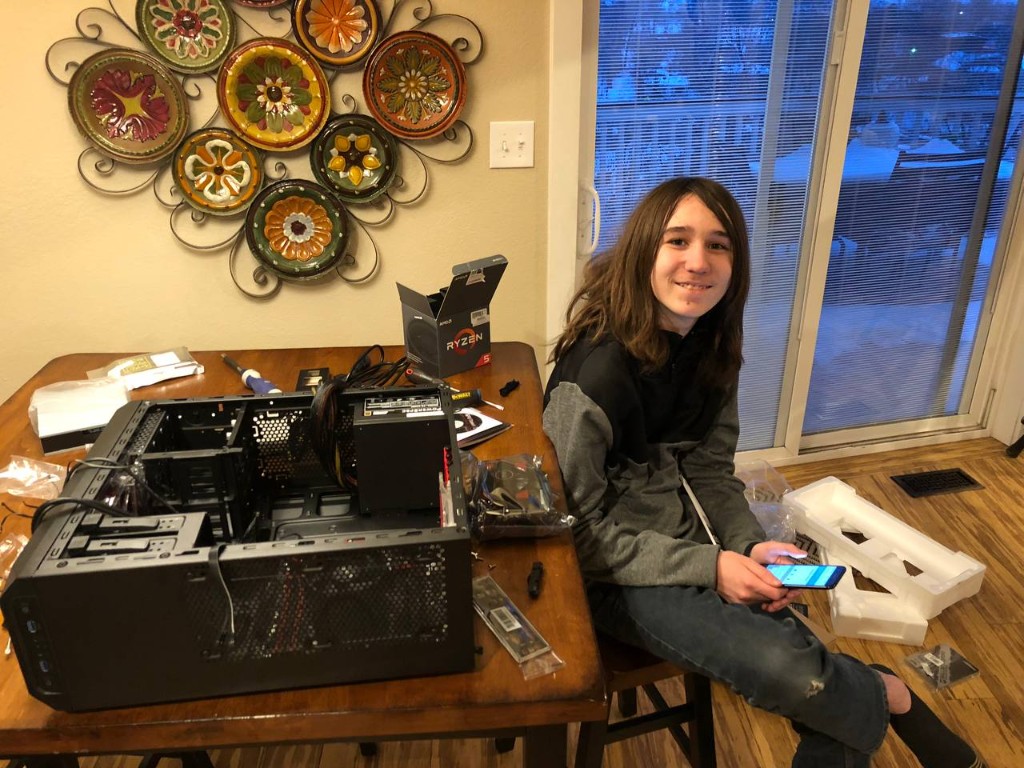
I had recently built my first computer, after my parents felt bad watching me attempt to use a $150 Lenovo laptop to render videos in After Effects.
An AMD RX 550, a Ryzen 5 1600, and 8GB of DDR4 RAM.
I fell in love with building computers, and went on to build 7 more in the years following.
I dreamed of one-day owning a 1080 Ti and an open-loop liquid-cooled system: which led me to developing an infatuation with investing. I could never afford that on my own, but perhaps I could if I bought some stocks and waited patiently.
The clear choices were AMD and NVDA, companies that I spent more time thinking about than I did my own family.
Although, despite my best efforts, I realized that buying stocks as a 12 year old is impossible.
Why? If I want to invest in a company I believe in, why does my age have anything to do with it? It was my money, after-all.
I had encountered my first wall.
What is a wall?
A wall is an artificial boundary between an individual and an action they are willing to take, but ultimately unable to. A wall exists when the capability is present, but an institution decides that you may not exercise it.
Put simply, a wall is withheld permission.
The removal of these walls is a delivery of freedom, and their existence is a confession of demand.
The most consequential technologies expand the set of actions an individual can take without permission. These are Freedom Technologies.
Freedom
Eventually, I was able to convince my parents to buy stocks for me, but this was hardly a solution. I still needed their permission to change positions, sell, or buy more.
This frustration led me to crypto, which was equally difficult to get liquidity into as a then 14-year-old, but once I did, it was an immense feeling of freedom.
I could invest in a near-infinite supply of tokens, earn yield, try my hand at being an LP and get destroyed by impermanent loss, and so on.
I was unbounded by my age and free to trade however I wanted to.
This was so freeing to me, in fact, that it motivated me to learn Python, JavaScript (and for reasons no one may ever be able to discern, Ruby), such that I could build my own tools on the blockchain.
At 15-years-old, I built and released a product called Amity DeFi, a Discord-based onchain trading bot that went on to serve 200 servers and held nearly $1M in assets, which kickstarted my now 5-years of working in the industry.
Street
My wall expired at 18. For most of the world, though, it never expires.
As an American, I have access to financial infrastructure so effective that it’s easy to mistake it for the natural state of the world: I can be paid in dollars, trade commodities and thousands of equities from my phone, earn high yield, and so on.
This is a privilege. It is not the natural state of the rest of the world.
For much of the world, access to American markets remains unnecessarily difficult, fragmented, and expensive; if not impossible.
Opportunity exists behind walls that have yet to be reliably torn down.
Street is my return to the original reason I was brought to blockchain, to move outside of the traditional system that excluded me.
We will make exposure to American markets open and free, in the same way the US dollar is being brought to global retail through stablecoins.
Street is the product I wanted when I was 12.
Wall Street, without the Walls.